
New biography exposes the clinical methods behind a fictional detective
Lindsey Fitzharris details how surgeon Joseph Bell’s diagnostic habits directly shaped Arthur Conan Doyle’s creation of Sherlock Holmes.
By Javier Morales ·
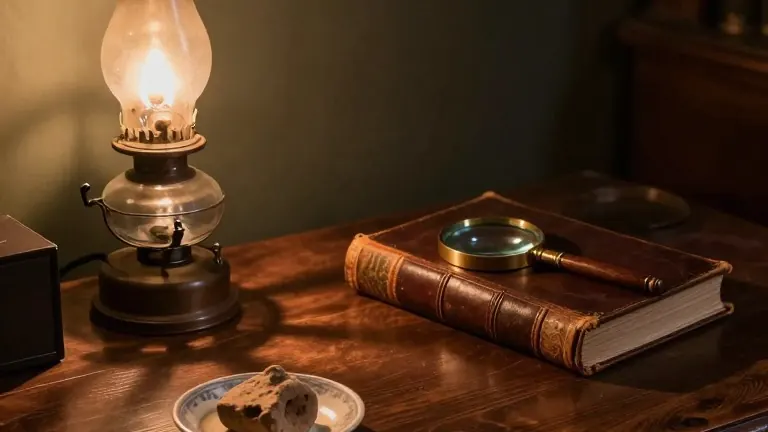
A new biography argues that the deductive brilliance of Sherlock Holmes was not pure invention but a direct reflection of real medical practice in late 19th-century Edinburgh. The book, titled Sleuth-Hound: The Case of the Real Sherlock Holmes, by medical historian Lindsey Fitzharris, details the life of Joseph Bell, a surgeon who taught Sir Arthur Conan Doyle during Doyle’s student days at the University of Edinburgh. Fitzharris presents Bell as a clinical detective whose specific techniques, such as inferring a patient’s life from their physical appearance, became the narrative engine for one of literature’s most famous characters.
The relationship between the author and the surgeon began in the 1870s. At the time, Doyle was a young medical student and Bell was a renowned professor. Bell was known for a diagnostic style that relied on observation rather than questioning. He would examine a patient and immediately deduce their occupation, habits, and ailments. This method stood in contrast to the standard medical practices of the era and left a lasting impression on the young writer.
Fitzharris, who previously wrote The Butchering Art about Joseph Lister in 2017 and The Facemaker about Harold Gillies in 2022, returns to her roots in Edinburgh medical history. Her earlier works focused on surgical pioneers and the gritty realities of Victorian medicine. In Sleuth-Hound, she applies that same historical lens to Bell, moving beyond the popular Sherlockian myths to examine the man as a practitioner and a colleague to local police surgeons.
The book highlights a specific anecdote that Doyle adapted for his fiction. Bell once determined the exact route a patient had taken to the infirmary by identifying the specific type of clay on the patient’s boots. Doyle used this incident as a central clue in The Sign of the Four. Bell’s work extended beyond the clinic; he collaborated with local law enforcement on high-profile murder cases, applying his observational skills to forensic analysis.
In an interview with Ars Technica, Fitzharris explained her motivation for the project. She noted that while Bell was known in academic circles, no major commercial biography existed. A 1982 book by Ely Liebow covered the topic but was limited in its appeal. Fitzharris wanted to provide a medical history perspective that was accessible to a general audience. She described the project as an opportunity to bring a professional historian’s eye to a subject that had been largely treated through the lens of literary fandom.
The publication of Sleuth-Hound coincides with a renewed interest in the historical figures behind famous fictional creations. Fitzharris’s previous work, including a 2020 Smithsonian Channel documentary series on famous deaths, has established her as a communicator who blends scientific rigor with narrative storytelling. Her latest book joins a list of recent projects that explore the intersection of medicine and popular culture, including a 2025 illustrated children’s book on medical failures written with her husband, Adrian Teal.
The book is now available for purchase. It serves as a reference for those interested in the medical history of Edinburgh and the specific biographical details that shaped the Holmes canon. Fitzharris’s work adds a layer of historical context to the fictional detective, grounding his impossible feats in the documented habits of a real surgeon.
Source: Ars Technica