Georgia records 5.5 million tourist visits amid two-year protest standoff
The country’s GDP rose by 7.5% in 2025, even as citizens continue weekly marches against the ruling Georgian Dream party.
By Javier Morales ·
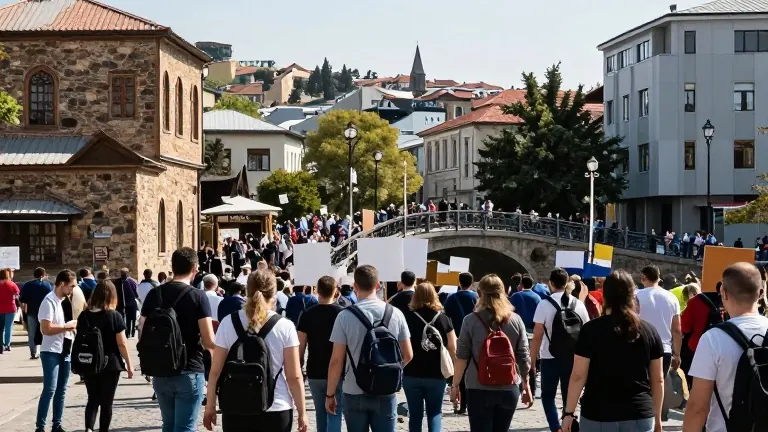
For residents of Tbilisi, the weekend rhythm is defined by a march that began in late October 2024. Crowds gather in Avlabari Square, located in the Armenian quarter, and walk toward the Bridge of Love. They continue to Freedom Square and finally to parliament, chanting against the government of Prime Minister Irakli Kobakhidze. This weekly protest, known as the Saturday March, marks the two-year anniversary of a political crisis that erupted after contested parliamentary elections on 26 October 2024.
The conflict centers on Georgian Dream, the ultraconservative party that has held power since 2012. Protesters accuse the party of increasing authoritarian control and shifting the nation’s focus toward Moscow by suspending European Union accession talks. Georgia received EU candidate status in 2023, but the government announced on 28 November 2024 that it would not prioritize opening formal negotiations before the end of 2028. That decision, made as protests reached their peak, solidified the divide between the government and a large portion of the population.
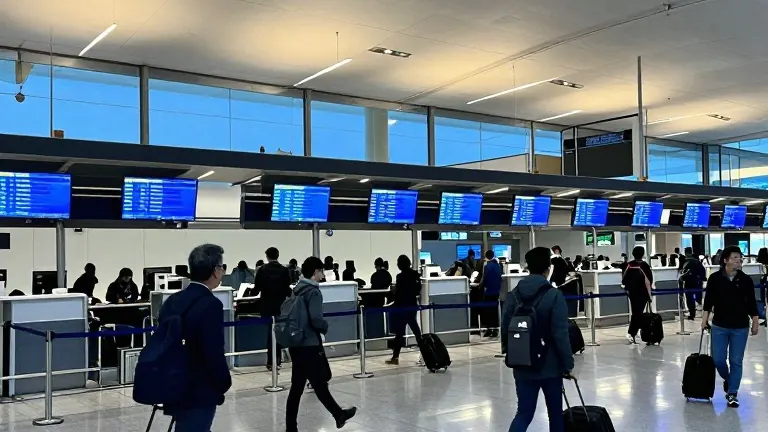
While political tensions persist in the capital, the country’s economy has expanded. In 2025, Georgia’s gross domestic product rose by 7.5%, marking five consecutive years of growth. This economic activity is driven in large part by a surge in tourism. The Georgian National Tourism Administration recorded more than 5.5 million international tourist visits last year, an 8.4% increase from 2024. This figure represents nearly ten times the number of visitors recorded two decades ago, which stood at approximately 560,000.
The influx of visitors includes travelers from Europe, the Middle East, and large numbers from Russia. Following the full-scale invasion of Ukraine in 2022, tens of thousands of Russian citizens moved to Georgia. These residents brought capital and opened businesses, which increased pressure on the property market as many purchased homes across the country. This demographic shift has fueled local discontent among Georgians who view Russia as an occupying power, a sentiment rooted in the early 1990s wars in South Ossetia and Abkhazia and the 2008 conflict with Moscow.
Georgia, a republic roughly the size of Ireland with a population under 4 million, emerged from the Soviet Union in 1991. Its economy relies heavily on Moscow for trade, tourism, remittances, and energy imports, even though diplomatic relations were severed after the 2008 war. The country faces challenges including unemployment, low wages, and rural depopulation. The relationship with the EU has also deteriorated recently, with Brussels criticizing the government’s record on the rule of law and political repression.
The Rustaveli theatre in Tbilisi, renovated 20 years ago by billionaire Bidzina Ivanishvili, serves as a symbol of the nation’s independence. Ivanishvili, who founded Georgian Dream and served as prime minister from 2012 to 2013, made his fortune in Russia during the 1990s. Today, the country sits between Russia and Turkey, with its future shaped by domestic unrest and wider geopolitical tensions in the Caucasus.
Source: The Guardian