Palestinian Voters in Israel Weigh Election Options
Twenty percent of the population faces a choice between two camps that offer limited policy shifts regarding land, policing, and civil rights.
By Amanda Clark ·
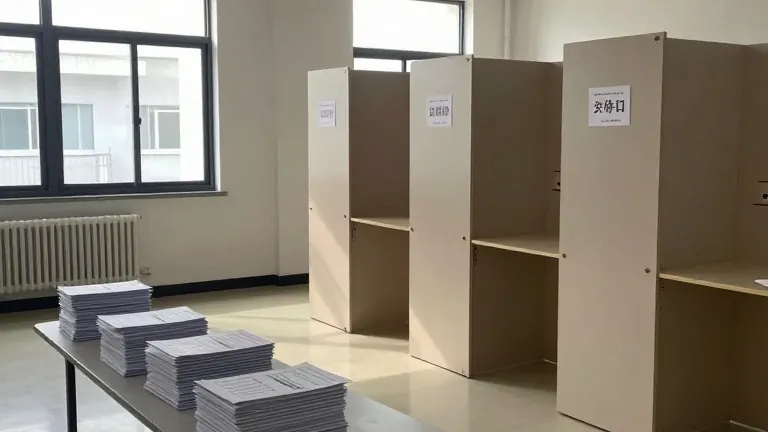
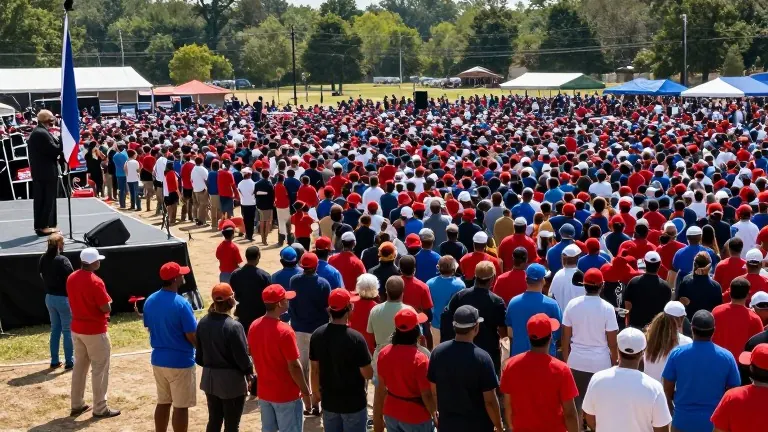
Israelis go to the polls on Tuesday to decide the next government, a contest framed primarily as a race between Prime Minister Benjamin Netanyahu and opposition leader Gadi Eisenkot. For the 20 percent of the population identified as Palestinian citizens of Israel, the choice presents a distinct set of challenges regarding their civil status and territorial control. These voters hold citizenship and the right to participate in the political process, yet many question whether their ballot can alter the trajectory of their communities.
The political mainstream in Israel has moved toward the far right, intensifying concerns among Palestinian residents about their collective rights. Communities face increased violence and encroachment by settlers on their boundaries. A recent push to expand the militarization of civilian life has added to the anxiety within the population. In this environment, the anti-Netanyahu bloc does not appear to offer a clear path to reversing these policies.
Palestinian citizens of Israel have held their status since 1952, when they were granted Israeli citizenship. The martial law that governed their lives was lifted in 1966. Despite these formal legal protections, many argue that citizenship has not shielded them from broader systems of dispossession. The state has used land confiscation and educational regulations to reshape Palestinian identity, often promoting a model that separates Arab Israelis from their national context.
Discriminatory laws and systemic underfunding of basic services continue to affect these communities. While the state has not always used direct violence against Palestinian citizens as it has in the West Bank and Gaza, it has outsourced brutality to criminal networks. Killings, shootings, bombings, and arson have increased as organized crime groups obtained advanced weapons reportedly stolen from army stockpiles or smuggled across borders. This escalation has claimed hundreds of lives.
Settlement expansion has accelerated alongside land seizure. In 2021, religious-nationalist settler groups began establishing themselves in Palestinian neighborhoods in mixed cities such as Jaffa and Lydd. In August, Finance Minister Bezalel Smotrich unveiled a plan to add one million Jewish residents to the Naqab and northern Israel. The proposal includes establishing 40 new settlements, dozens of farms, and hundreds of thousands of new housing units to extend the model of territorial control into areas where Palestinian communities are concentrated.
Security measures are also shifting. National Security Minister Itamar Ben-Gvir established the National Guard, a force whose role remains under development but which is expected to police Palestinian towns and villages. The creation of this unit was prompted by the May 2021 Dignity Uprising in towns like Lydd, Haifa, and Umm al-Fahm. Ben-Gvir has also issued 300,000 gun licenses since taking office, widening access to personal firearms and integrating settler security squads into the broader security framework.
Political parties representing Palestinian citizens, such as the United Arab List led by Mansour Abbas, have argued that supporting the anti-Netanyahu camp can halt the far-right agenda. However, their track record in the 2021 coalition government complicates this claim. That administration excluded Netanyahu but failed to bring fundamental changes to the conditions of Palestinian citizens. In 2022, party member Mazen Ghnaim acknowledged that he could not push through beneficial policies despite his party's position in the ruling coalition. He also cited heavy criticism from his own community during visits.
The experience in the 2021-2022 coalition illustrated the difficulty of sustaining Palestinian political participation in a government where other parties uphold exclusionary nationalist policies. Many voters believe that support for the opposition cannot translate into meaningful policies that challenge the structures of discrimination. While voting may slow the current project, it may not reverse the deeper transformation taking place in Israeli society.
Some political leaders argue that another four years of far-right rule would pose an immediate threat to Palestinian communities. They plan to vote in Tuesday's election while pushing for a more radical political response. This includes reforming the High Follow-Up Committee for Arab Citizens of Israel and rooting it more firmly in Palestinian society through grassroots organizing. The goal is to build a larger political project that addresses the structures driving the current transformation.
The fate of Palestinian citizens of Israel remains tied to the fate of the wider Palestinian population. Political leaders are increasingly called to embrace this connection. The election on October 27 will determine the next government, but for one-fifth of the electorate, the outcome offers no guarantee of immediate change in their daily lives.
Source: Al Jazeera